15 min read
GTA 6 Gameplay Leaks Explained: What Was Real, What Changed, and What Players Miss
A deep breakdown of GTA 6 gameplay leaks.
In this article
- Why the GTA 6 Leak Story Matters Beyond Hype
- Verified Timeline: From 2022 Breach to Official GTA 6 Rollout
- What the Leaked Gameplay Footage Actually Revealed
- How to Interpret Leaks Without Overfitting Conclusions
- Security, Production Risk, and Why This Leak Was a Big Industry Signal
- Bottom Line: Leaks Can Inform, But Official Material Should Anchor Expectations
Why the GTA 6 Leak Story Matters Beyond Hype
Most discussions around GTA 6 leaks focus on shock value, but the real value comes from understanding what the incident revealed about modern AAA development under pressure. In September 2022, leaked development footage circulated publicly, and Rockstar later confirmed it had suffered a network intrusion in which confidential material was accessed and downloaded. That moment became one of the clearest case studies in how unfinished development assets can be misread by the public when stripped of production context. If you want to separate signal from noise, the leak is less about sensational clips and more about how large studios iterate gameplay systems over many years before anything looks close to release quality.
For players, this matters because expectations get shaped early and often incorrectly. Pre-release narratives can harden around placeholder visuals, incomplete AI behavior, or debug-heavy interfaces that were never meant to represent final player-facing quality. Once that narrative spreads, every official reveal gets compared against assumptions built from out-of-context material. A better reading is to treat leak footage as a technical snapshot of work-in-progress priorities, not as a final design promise. This article follows that approach and uses verifiable sources to explain what the footage likely indicated, what it did not confirm, and why that distinction is essential for serious GTA 6 analysis.

Verified Timeline: From 2022 Breach to Official GTA 6 Rollout
The timeline is more concrete than many people realize. Reuters reported in September 2022 that a hacker posted what was described as around 90 videos of early Grand Theft Auto VI gameplay on GTAForums, while Rockstar publicly acknowledged a network intrusion and confirmed the footage authenticity as early development material. Bloomberg's reporting at the time further indicated Rockstar staff had already verified the leak internally, which removed ambiguity about whether the clips were fabricated. This matters because a lot of internet commentary still treats the event as if authenticity were uncertain; in reality, the key uncertainty was never "is this real," but "what development phase do these clips represent?"
After that disruption, Rockstar shifted back to controlled communication: Trailer 1 arrived in December 2023, Trailer 2 followed later, and the official GTA VI site now anchors release messaging around May 26, 2026. That sequence shows a typical crisis-to-control arc in blockbuster publishing. First, unauthorized disclosure creates narrative chaos; second, official assets reset framing through polished, intentional presentation; third, the publisher re-centers audience expectations on confirmed milestones. For readers trying to assess leak relevance in 2026, the practical rule is this: the closer a detail is to current official material, the higher its confidence weight should be in your interpretation model.

What the Leaked Gameplay Footage Actually Revealed
Even without sharing unauthorized media, the documented descriptions of the leaked clips were enough to show meaningful technical direction. Reports described robbery scenarios, interior interactions, NPC and police response behavior, and development overlays associated with debugging or scripting states. That combination suggests Rockstar was actively tuning systemic encounter design rather than polishing cinematic presentation at that stage. In practical terms, this is exactly what experienced teams do in mid-to-late production: they stress-test mission logic, encounter pacing, AI reactions, and traversal flow before visual finalization. Interpreted correctly, those clips signaled systemic ambition, not visual incompleteness as a product flaw.
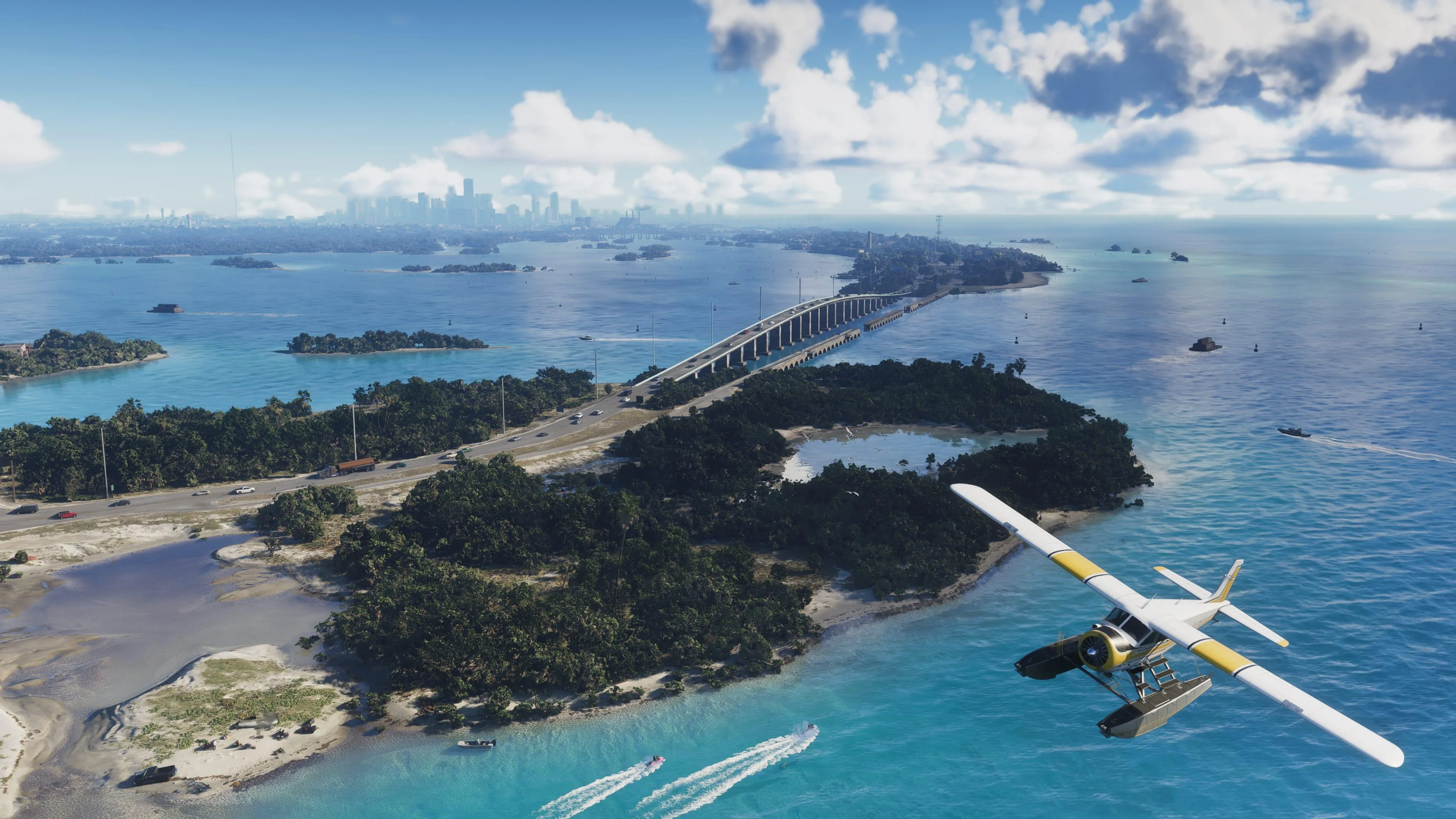
The most common analytical mistake was to treat unfinished rendering as evidence of weak graphics direction. In real pipelines, rendering quality, animation polish, and final world detail pass are often downstream from core systems iteration. A debug-heavy clip can look rough while still representing advanced progress in core mechanics. For GTA 6 specifically, the later official trailers and screenshots support this reading: they present a far more finished visual profile while preserving signs of dense simulation and layered world interaction. That evolution is consistent with a normal AAA path from systems-first iteration to integrated polish, not with a project "fixed" after leaks.

How to Interpret Leaks Without Overfitting Conclusions
The right way to read gameplay leaks is probabilistic, not absolute. Ask which elements are likely structural and which are likely temporary. Structural signals include mission-style scaffolding, interaction density, world state logic, and the breadth of AI-driven responses visible even in early form. Temporary signals include UI layout, lighting balance, animation blending quality, placeholder voice segments, and unoptimized performance. When readers fail to separate these categories, they either overhype or overcriticize based on evidence that was never designed to answer their question. A structured lens produces better forecasts and avoids emotional swings every time unofficial material appears.
Another essential filter is survivorship bias in leaked clips. Leaks rarely show a representative distribution of build states; they show whatever was captured and exfiltrated, often with no metadata, no chronology, and no internal commentary. That means viewers can overgeneralize from a narrow sample and treat edge-case testing scenarios as central design pillars. If you have followed prior Rockstar releases, you can see the pattern: public assumptions formed years ahead of launch often miss where final emphasis lands. The practical takeaway is to use leaks for directional clues only, then wait for official assets to validate product pillars before making high-confidence claims.
Security, Production Risk, and Why This Leak Was a Big Industry Signal
The GTA 6 leak also highlighted a broader industry problem: when high-value projects span global teams, collaboration infrastructure becomes part of the attack surface. Public reporting around the UK case tied to the breach underscored how a single intrusion can cause legal, operational, and reputational overhead far beyond the raw value of leaked files. For a publisher, that overhead includes incident response, legal work, communication control, vendor trust management, and internal morale stabilization. None of that ships features, but all of it consumes executive and production bandwidth at a time when milestone predictability is already difficult.
From a player perspective, the key insight is that security incidents can shape communication cadence as much as creative strategy does. Studios may become more conservative about showing work-in-progress, and that can make development look "quiet" from the outside even when progress is strong. In GTA 6's case, the eventual official rollout demonstrates that Rockstar prioritized resetting the conversation on its own timeline with polished, context-rich assets. That approach is strategically rational: it reduces misinterpretation, reclaims narrative control, and gives audiences a cleaner signal about what the shipping vision actually looks like.
Bottom Line: Leaks Can Inform, But Official Material Should Anchor Expectations
The strongest conclusion is that the 2022 leak offered real directional insight into GTA 6's systemic depth, but it was never a reliable proxy for final gameplay quality, performance, or content balance. The footage was authentic in the sense that it came from real development material, yet authenticity is not the same as finality. That distinction is the entire discipline of leak analysis. If you treat every leaked clip as a near-final representation, you will misread the project. If you treat leaked material as one input alongside official trailers, official screenshots, and confirmed release messaging, you get a more accurate and stable understanding.
For players following GTA 6 closely, the practical framework is straightforward: use leaks to identify possible design direction, use official assets to confirm what Rockstar is willing to stand behind publicly, and update your expectations only when both signals converge. This approach avoids both blind hype and cynical overreaction. It also respects how modern game development actually works, which is iterative, nonlinear, and often visually rough until relatively late in the pipeline. Serious analysis is not about who posts the earliest clip; it is about who interprets evidence with the right confidence level.
FAQ
Were the 2022 GTA 6 gameplay leaks real?
Yes. Rockstar publicly confirmed that the leaked material came from an unauthorized network intrusion and represented early development footage.
Do leaked clips represent final GTA 6 gameplay quality?
No. Leaked clips from debug or pre-release builds are not reliable indicators of final visual polish, performance, or content balance.
How should players interpret leaked gameplay clips?
Treat leaked clips as early technical snapshots, not final product quality. Use official Rockstar trailers and screenshots as the main source of confirmed direction.
Related reading
Build a stronger gaming workflow with these pages:

Keep the momentum going
If this guide helped, Video Game Tracker might help too. Our iOS app is built to support your gaming journey with focused lists, clear progress history, and simple weekly review habits.